Fuel & Recharge Access Systems: New Generation of Vehicle Access Modules
Fuel & Recharge Access Systems: Developing New Generation of Vehicle Access Modules
Today, fuel and recharge access systems can combine mechanical design, actuation, electronics, lighting, safety functions, material expertise and vehicle integration. This evolution requires the combination of multiple areas of expertise, which we will explore by showing how Cebi designs, develops and industrializes fuel and recharge access modules.
Behind the visible flap is a complete engineered system designed to deliver functionality, safety, reliability and perceived quality throughout the vehicle lifetime. “The customer decides how they want to do that, and we need to find a viable mechanism to make it work in the way that the customer expects.” states Angelo Serpeloni, Technical Director Cebi Brasil.
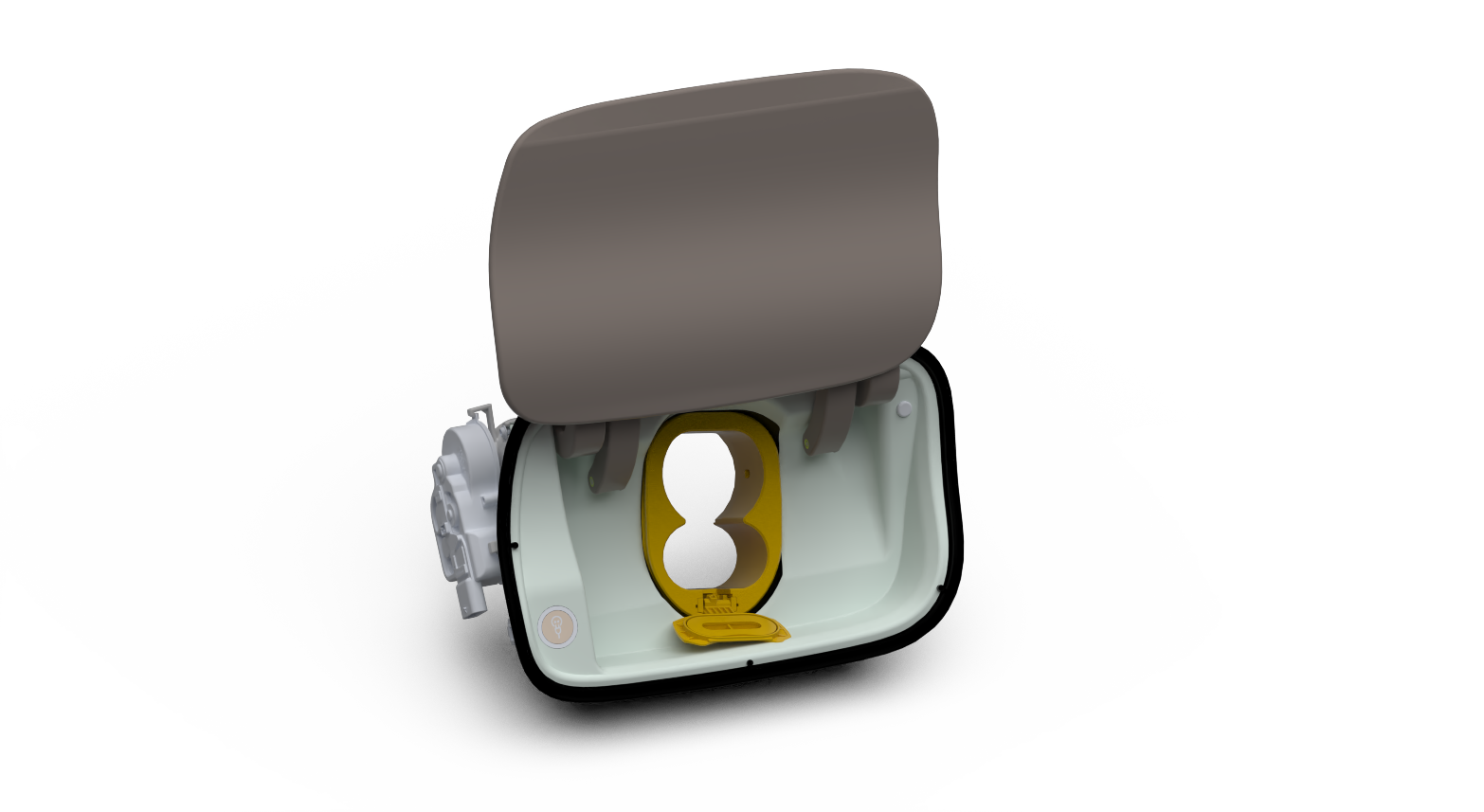
A Visible Interface with High Technical Content
Fuel and recharge access systems are directly visible to the final user. Their performance is therefore evaluated both functionally and visually.
From an engineering perspective, the module must meet requirements for robustness, sealing, repeatability and safety, while respecting demanding exterior standards such as gap, flush, surface quality and paint compatibility.
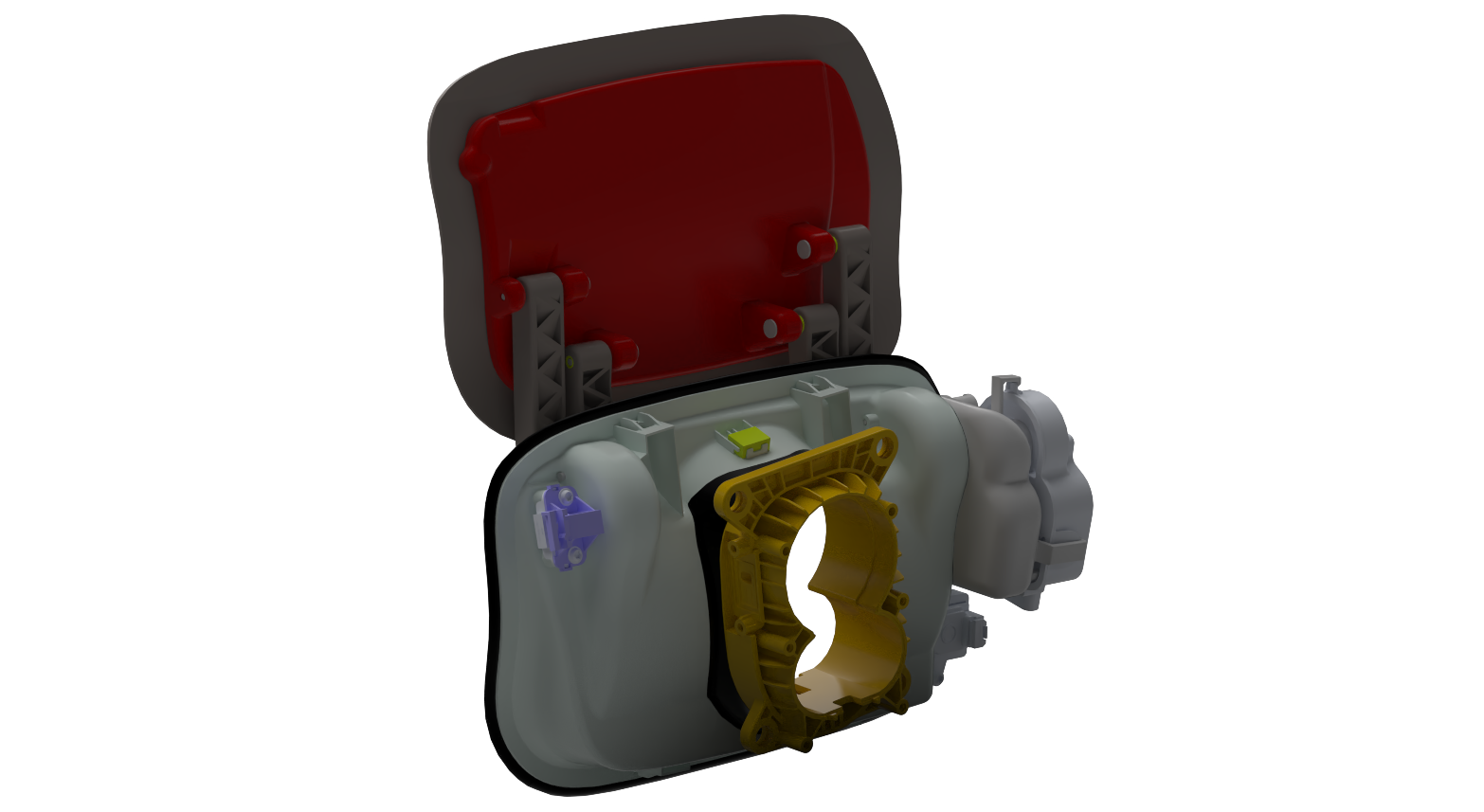
Cebi’s expertise covers the complete development chain required to control these parameters: kinematic design, material selection, injection simulation, FEM analysis, tooling fine-tuning, no-contact 3D scanning, 3D printing technology, visual inspection and end-of-line quality checks. The Stellantis DCross lessons learned identify these capabilities as key success factors for this product family.
Mechanical Design Adapted to Each Vehicle
There is no universal architecture for fuel and recharge access systems. Each module must be adapted to the vehicle platform, body design, available packaging space, connector position and customer expectations.
Cebi works on several opening concepts, from standard flap movement to vertical, lateral and parallel opening solutions. For advanced vehicles, the system can also include full automation, sensor-based interaction, lighting feedback and complex opening kinematics.
Cebi’s role is to transform a vehicle-specific requirement into a robust, compact and industrializable mechanism.
Actuation, Electronics and HMI Integration
Actuators are one of Cebi’s key areas of expertise and play a central role in fuel and recharge access systems. Depending on the application, the module may integrate a push-push actuator, a locking actuator, a rotational motor or a fully motorized opening and closing system.
In advanced applications, actuation is integrated with the mechanical architecture, electronic control unit, HMI, vehicle interface and safety requirements. This enables functions such as motorized opening and closing, locking, ice breaking, anti-pinching and controlled movement across demanding operating conditions.
For electric and plug-in hybrid vehicles, electronicsF and HMI functions increasingly contribute to user experience. The module may communicate with the vehicle, manage diagnostics, indicate charge status and provide visual feedback through compact indicators, illuminated buttons or halo-style lighting around the charging connector.
For one customer, Cebi is developing a motorized module, with a high level of integration. The system includes a DC actuator, LIN 2.x communication, a 9–16 V operating voltage range, a 4-bar linkage, and functions such as ice breaking, anti-pinching and tip-to-run. It operates across a temperature range from -40°C to +85°C.
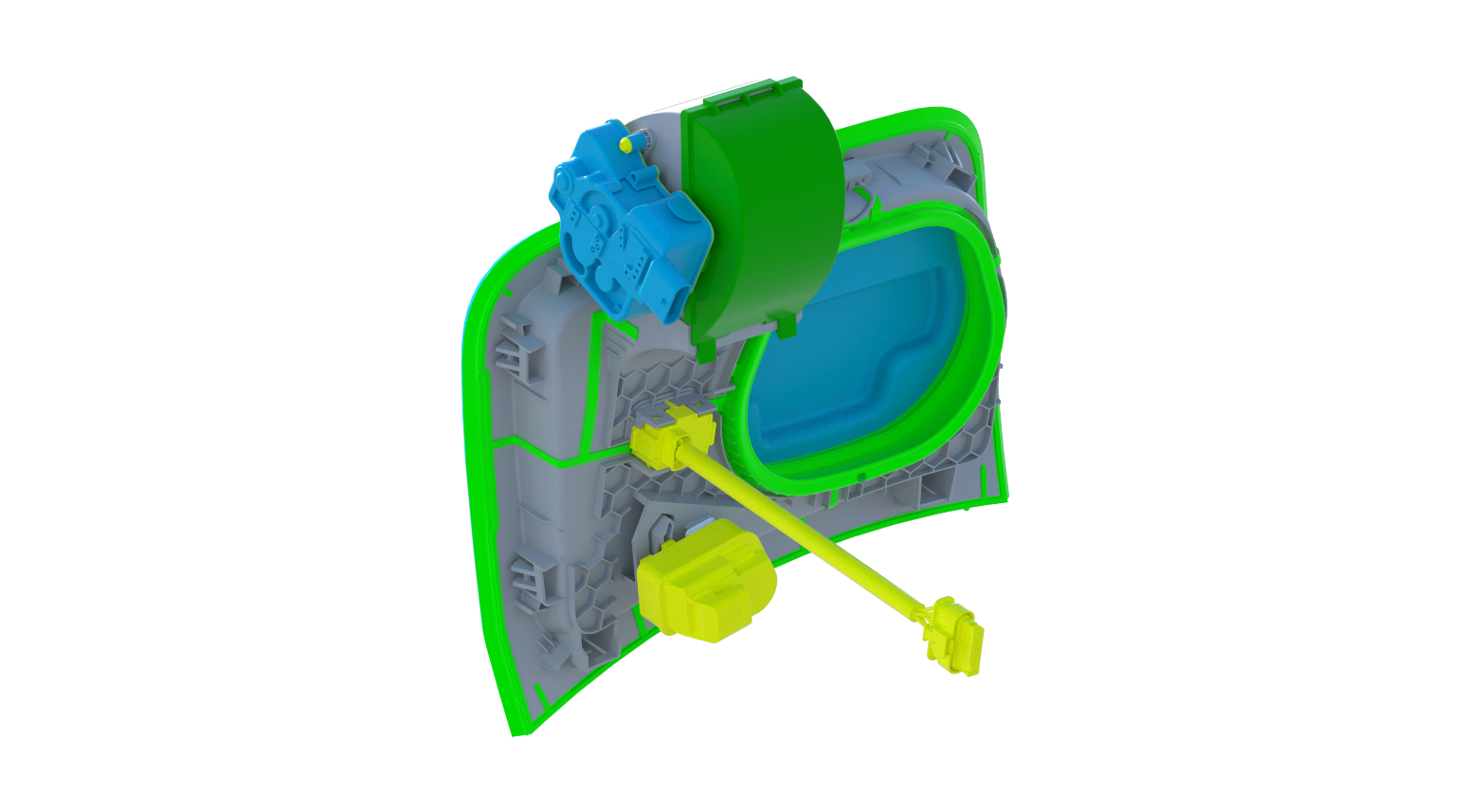
These functions show the value of Cebi’s system-level approach. The actuator is not developed in isolation; it is integrated with the mechanical architecture, the ECU (Electronic Control Unit.), the HMI, the vehicle interface and the safety requirements. Simone Di Cori described the external ECU* as “the brain for the module,” because it connects the access system with the vehicle.
Materials, Injection and Exterior Precision
Fuel and recharge access modules combine structural, functional and aesthetic requirements. The flap is part of the exterior vehicle surface and is often painted in the OEM production line to ensure colour matching with the body.
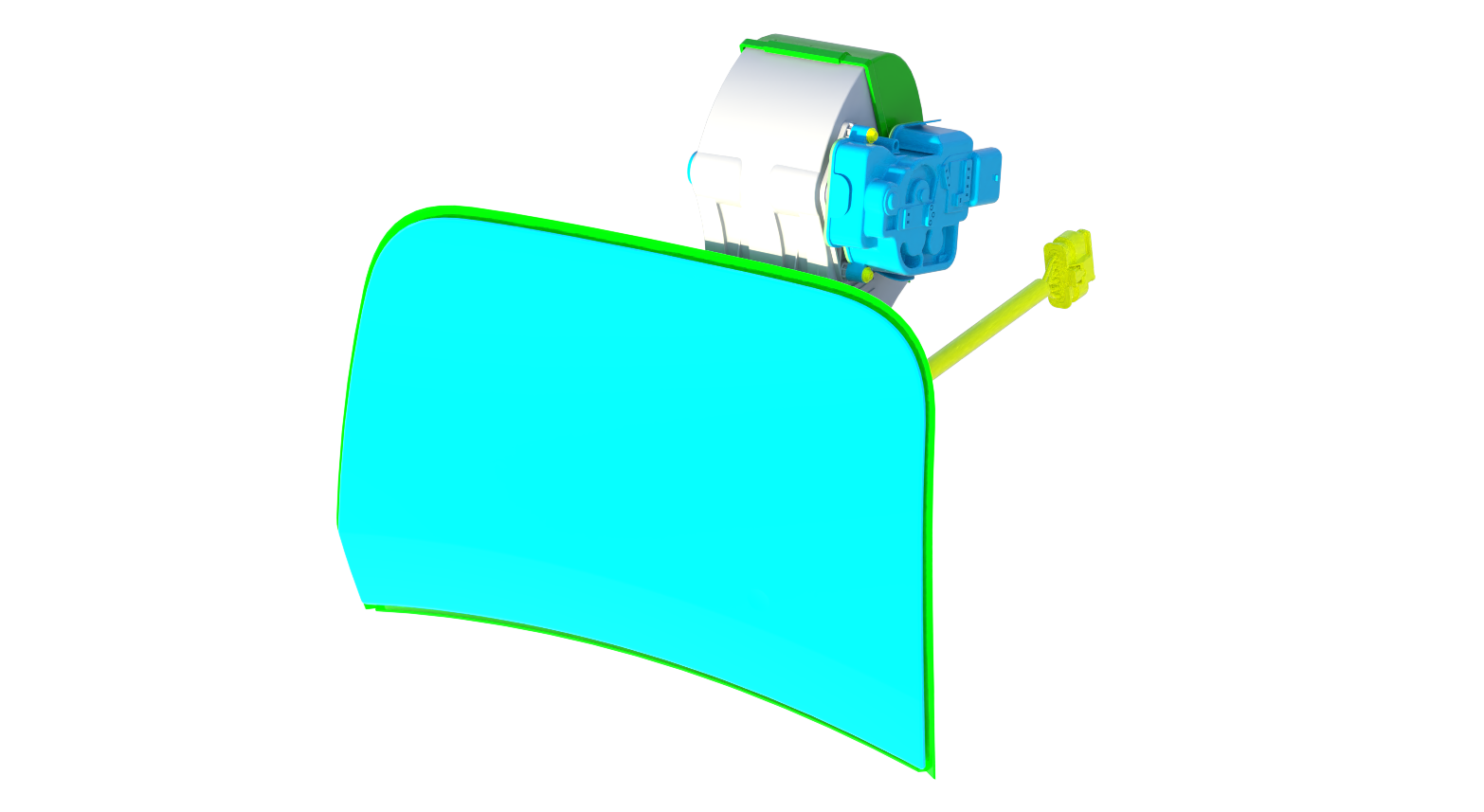
This places specific requirements on material selection. The material must tolerate painting-line temperatures, remain dimensionally stable, support paint adhesion and, in some cases, provide conductive behaviour for the painting process.
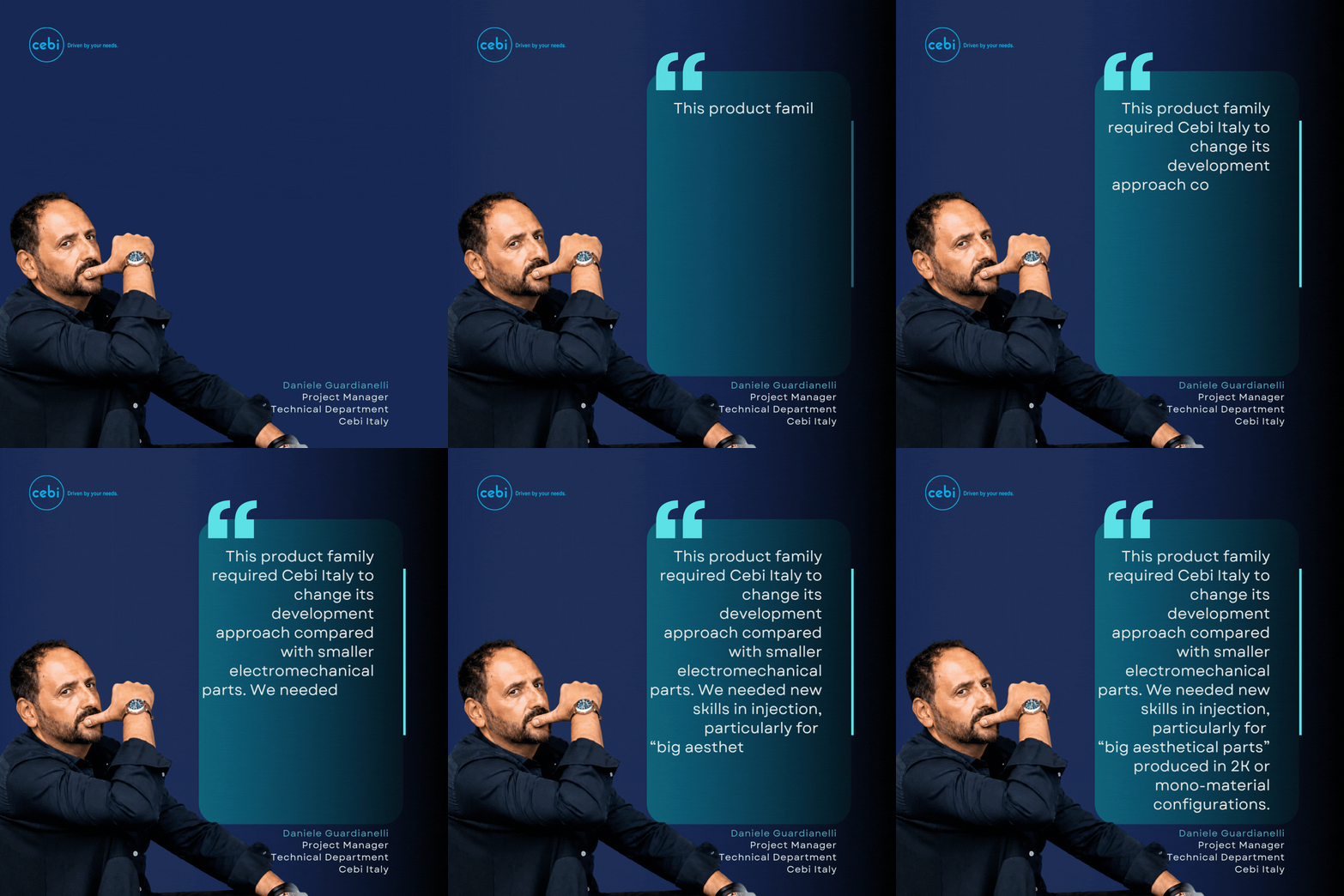
Cebi’s experience includes large aesthetic plastic parts, technical plastic parts, 2K injection and mono-material solutions. Because the module is mounted on the vehicle exterior, small dimensional deviations can become visible. This makes metrology and process control essential, supported by advanced measurement methods such as no-contact 3D scanning.
Validation from Bench to Vehicle Environment
A fuel or recharge access system cannot be assessed only as a standalone component. It must be tested as an interface with the vehicle body, electrical architecture, charging connector, user interaction and production process.
Cebi validates its systems progressively, from laboratory benches to representative vehicle-frame environments. Testing can cover mechanical endurance, environmental exposure, sealing, electrical behaviour, anti-pinching, ice operation, gap and flush, assembly repeatability and end-of-line performance.
Preparing Access Systems for Future Mobility
The future of recharging may include automated charging robots, wireless charging and more advanced interaction between vehicle and infrastructure. Whatever the technology, the access zone must remain reliable, safe, protected and fully integrated.

Cebi’s combination of actuator technology, electronics, kinematics, plastic injection, metrology and system validation provides a strong foundation for these future developments.
Cebi’s Technical Value: Integrating the Whole System
The value of Cebi’s approach lies in its ability to manage the fuel and recharge access module as a complete engineered system.
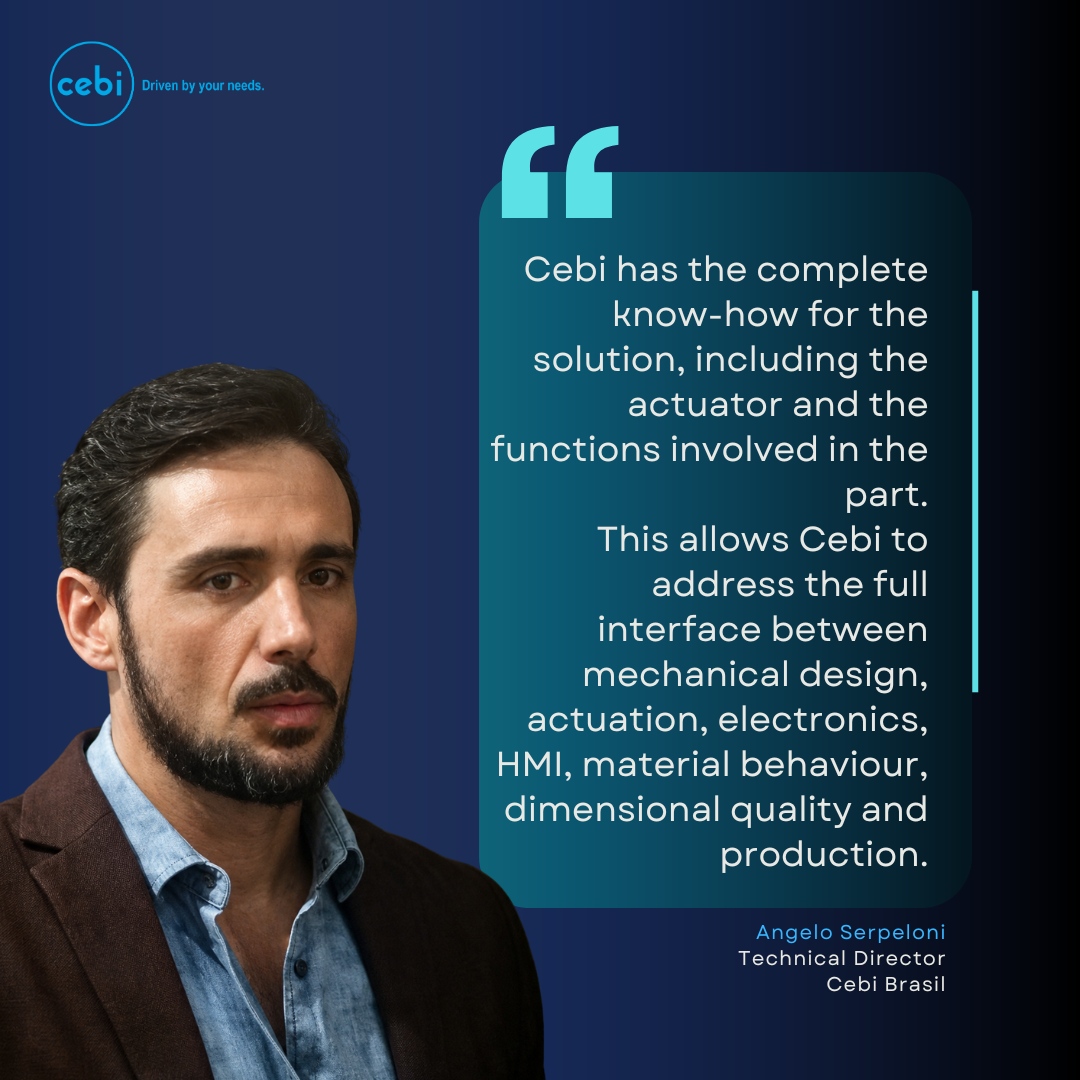
Cebi brings together mechanical design, actuation, electronics, HMI, lighting, material behaviour, dimensional quality and production know-how. This integrated approach helps reduce technical interfaces, improve functional coherence and support reliable industrialization.
Cebi’s expertise makes it possible to transform this exterior interface into a precise, robust and high-value technical system, ready for the next generation of vehicles.

